
The Life Cycle Hypothesis (LCH) is an economic model developed by famed economist Franco Modigliani in the early 1950’s, which attempts to explain the saving and consumption patterns of individuals over their lifetime. The is that by assuming all individuals maintain stable lifestyles, they will plan to even out their consumption as best they can over their lifetime. This implies that an individual will transition through multiple phases of saving and consumption patterns throughout their life. In their youth, before entering the workforce, an individual will borrow against future earnings, many to pay for education and training. Once that individual enters the workforce, they will become a net saver, as they put money away for their eventual retirement. Finally, in the twilight stages of their life, once an individual retires, they will become a dis-saver, as they begin to drain their accumulated retirement savings.
globalEDGE Blog - Page 101

Publish Date:
Oil prices worldwide are in decline. Much of the decline in oil prices has been contributed to rising oil production in the United States. To combat this it is expected that at their meeting in May. As recently as it was reported that Saudi Arabia was gathering support from other OPEC countries in extending their cap on production.

Publish Date:
In the past decade, technology has changed the way people operate dramatically. Uber has enabled a user to order a car to their house and see, in real time, their ETA (estimated arrival time). Grubhub has helped one order food from places which usually do not deliver so the individual can stay on the couch and continue binging on the newest Netflix hit. Founded in 2008, Airbnb has now taken the world by storm, connecting travelers to places to stay in over . Travelers all over enjoy the vast availability of options they have at their fingertips, from a single bed apartment to spending a night in a castle. However, this has begun to cause strife with the American Hotel and Lodging Association and hotels all over the world.
Publish Date:
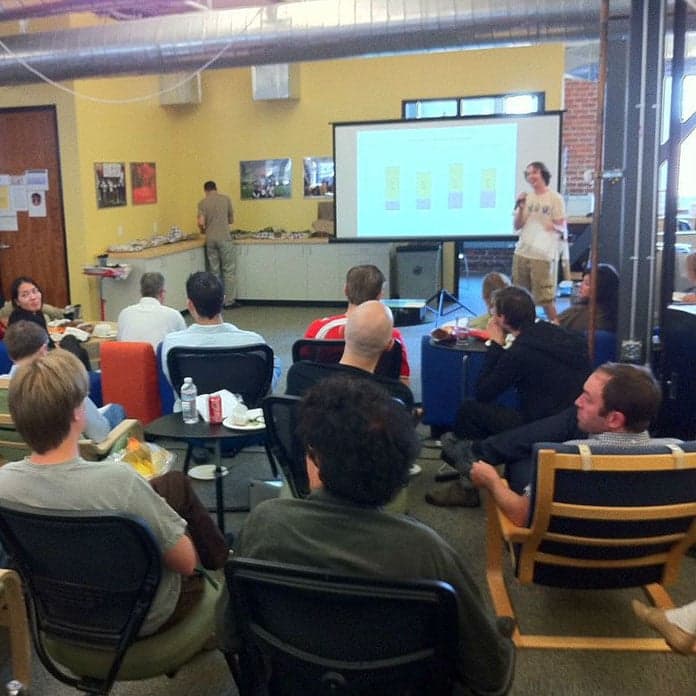
This Friday, April 18th, the International Business Center at Michigan State will be holding a workshop in Madison, Wisconsin, as part of the educational effort. The On the Road workshops are an extension of the flagship International Business Institute for Community College Faculty (IBI) which was offered in East Lansing, Michigan, from 1995 to 2015. The IBI’s goals are to provide participants with the knowledge, experience and resources they need to internationalize general business courses and/or develop specialized international business courses at the two-year college level.

Publish Date:
As the world is becoming more connected, the courier, express & parcel (CEP) industry is growing and evolving. Online shopping has induced this growth significantly, with companies such as Amazon and Alibaba playing a major role. The ease with which a consumer can find items online from a variety sellers with many delivery options and often reviews and ratings, has shifted the purchasing power significantly to the hands of consumers. This forces retailers to offer better service and cheaper delivery. This, in turn, has created a lot of issues for CEP companies and has forced them to rethink their strategies, as costs have been rising faster than revenues. Also, emails and social media have almost completely replaced the use of mail delivery, which required postal companies to shift their main focus to parcel delivery products, services, and supply chains that would create better revenue streams.
Publish Date:
is a great resource for your international business needs. The website contains a wide variety of tools and information to help you and your business succeed with international trade. Recently, Export.gov released to help educate small and medium-sized companies on exporting, and to encourage these businesses to start exporting or expand their exporting operations.

Publish Date:
In the last blog of this week's series, we take a look at the airplane manufacturing industry.
2017 has proved to be a successful year for airplane manufacturing so far. The industry experienced a surge in aircraft orders in February, putting it on track for a record year of directories. , in particular, the number of commercial aircraft ordered by airlines jumped to 43 last month from just 4 in February of the previous year, according to the Aerospace, Defence, Security & Space Group. These figures are based on orders from Airbus, Boeing, Bombardier (Canada), Comac (China), and Irkut (Russia).

Publish Date:
Part four of our transport manufacturing blog series examines the role emerging markets play in the industry.
Emerging markets are proving to be key areas for future growth in the transport manufacturing industry. shows continued strength in logistics, infrastructure, and investment potential for large emerging markets, including the United Arab Emirates, Malaysia, and Saudi Arabia. According to the index, countries such as India and Kazakhstan significantly strengthened their business capacity over the past year, warranting further attention from international logistics executives. In addition, China, India, and Brazil have become and . Despite frequently cited concerns in dealing with emerging markets—government corruption, tax laws, and customs—more corporations within the transport manufacturing industry are hoping to expand their business in these countries.

Publish Date:
In part three of our transport manufacturing blog series, we look at high speed trains.
In 2013, the Japanese government set the goal of tripling its infrastructure exports, such as nuclear plants and bullet trains, to a nearly . Pros for the Shinkansen bullet train include a sound safety record, low emissions, and punctuality, but despite its technological advancements, foreign buyers remain unconvinced of the feasibility of the bullet trains.

Publish Date:
This week, the National Business Education Association () is holding its annual convention in Chicago, Illinois. NBEA is celebrating its 125th anniversary this year, and the convention will include over 70 educational sessions which will cover a variety of topics related to business education. Today is the first day of the convention, which will run throughout the week, ending on Friday the 15th. Check out the to learn more about conference details and the topics to be covered.